For WorldatWork Members
- Commuter Benefits: Accelerating Effective Strategies, Workspan Magazine article
- Commuting Considerations Could Be Key in RTO, Workspan Magazine article
- Checklist: Evaluating EVP Delivery Across Work Arrangements, Workspan Daily Plus+ article
- Lead with Well-Being in HDHP and HSA Communications, Workspan Daily Plus+ article
- On the Right Track: A Guide to Vehicle and Commuter Benefits, research
For Everyone
- Will Office Premiums Lure Employees Back to In-Person Work? Workspan Daily article
- Soaring Gas Prices Are Adding to Your Employees’ Financial Stress, Workspan Daily article
- How Sweetening the Pot May Improve Your RTO Lot, Workspan Daily article
- Do Your Employees Understand the Health Plan They Picked? Workspan Daily article
- Health and Welfare Plans: Plan Types and Administration, course


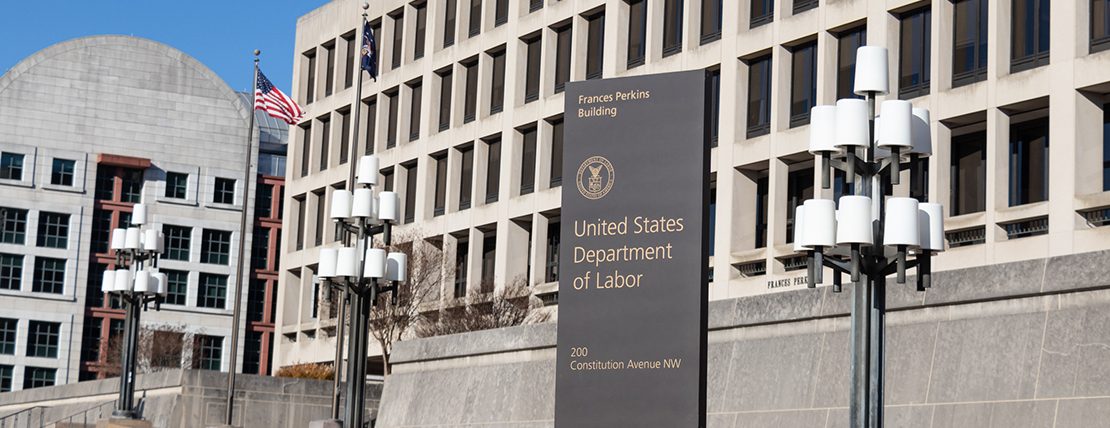
The U.S. Department of Labor (DOL) made several moves recently aimed at clarifying aspects of the Fair Labor Standards Act (FLSA) and the Employee Retirement Income Security Act (ERISA).
Opinion Letters Address Commuter Travel, Remote Work
The DOL issued two opinion letters on Wednesday, July 22, that address how the FLSA applies to the commuter travel of employees who work part of their workday at home.
The purpose of such letters are to:
- Provide written interpretations from the department’s enforcement agencies, including the Wage and Hour Division, that address application questions from individuals or organizations;
- Explain how specific laws (e.g., the FLSA) apply to specific factual circumstances; and,
- Help employers understand their rights and responsibilities, and allow them to make informed decisions regarding a wider variety of employee work arrangements.
The two issued opinion letters are:
-
FLSA2026-9
- At issue: Whether midday travel between an employee’s home and work office is worktime that an employer must record and pay for under the FLSA, where the employee performs work at both locations and the midday travel is offered as a voluntary alternative to unpaid commuter travel that would otherwise occur before or after the employee’s workday.
- The inside scoop: The DOL’s opinion is that such midday travel would qualify as “normal” or “ordinary” commuter travel, which is not hours worked under the FLSA. Accordingly, an employer wouldn’t need to record such travel time as work, and generally it wouldn’t be subject to wage-and-hour requirements.
-
FLSA2026-10
- At issue: Whether time spent by an employee receiving pages, calling clients and other workers to schedule appointments, and driving from home to the first client appointment is worktime that an employer must record and pay for under the FLSA.
- The inside scoop: The DOL’s opinion is that time spent receiving pages isn’t compensable hours worked as it is incidental to an employee’s use of an employer-provided vehicle for commuting. In contrast, time spent calling clients to schedule appointments and scheduling other field service engineers is compensable hours worked as it’s not incidental to the employee’s commute, but rather integral and indispensable to their principal work activities (in this case, installing and servicing equipment at client sites). Also, under certain circumstances, where an employee is required to be engaged in calling clients before or during the commute, the department wouldn’t consider such travel to be either an “ordinary” commute or otherwise not compensable under the Portal-to-Portal Act. As a result, this travel would be compensable hours worked.
Proposed Rule Would Push E-Delivery of Required Health Plan Documents
The DOL’s Employee Benefits Security Administration on Wednesday, July 22, issued a proposed rule that would modernize how group health plans deliver required disclosures. The intent is to make communication faster, more efficient and less costly.
The proposal would establish a safe harbor allowing approximately 2.8 million ERISA-covered group health plans to digitally provide required health plan documents. According to the DOL, group health plans annually print and mail up to 11 billion sheets of paper. The department estimates the change would save group health plans $3.9 billion over 10 years while giving participants and beneficiaries easier, more reliable access to their health plan information.
DOL Acting Secretary Keith Sonderling called the proposal “a commonsense change that delivers real savings and better service for workers across the country.”
The department is proposing to add another method ERISA-covered group health plans can use to provide electronic communication to recipients. In 2002, the department issued a rule that provided a safe harbor for electronic communication to recipients in two categories:
- Participants who can be considered “wired at work”; and,
- Participants, beneficiaries and other individuals who consent to receive documents electronically.
Editor’s Note: Additional Content
For more information and resources related to this article, see the pages below, which offer quick access to all WorldatWork content on these topics:

#1 Total Rewards & Comp Newsletter
Subscribe to Workspan Weekly and always get the latest news on compensation and Total Rewards delivered directly to you. Never miss another update on the newest regulations, court decisions, state laws and trends in the field.