For WorldatWork Members
- Show Me the Gratitude: The Effect of Recognition on Employee Engagement, Workspan Magazine article
- Finding a Balance: Blending Incentives and Recognition, Workspan Magazine article
- How You Know When Your Recognition Program Is Working, Workspan Magazine article
- How to Incorporate Skills into Rewards and Recognition, Workspan Daily Plus+ article
- Seeing the Unseen: Identifying Gender Bias in Employee Recognition, Workspan Daily Plus+ article
- Trends in Employee Recognition, research
For Everyone
- Talent Scout: What’s Your Success Rate at Identifying High Potentials? Workspan Daily article
- Recognize that Employee Recognition Needs Some Attention, Workspan Daily article
- Recognition’s Rise in the New World of Total Rewards, Workspan Daily article
- Trust Never Sleeps: How TR Pros Can Stay Awake on This Issue, Workspan Daily article
- Lack of Coaching Is Killing the Performance of Performance Management, Workspan Daily article
- Shhhh: Here Are the Pros and Cons of Quiet Promotions, Workspan Daily article


In one of my HR consulting roles, I saw something remarkable. I was sitting with a manager during a performance review debrief. He had just finished talking to one of his employees, and I asked him how it went. He said something that stayed with me: “I see a lot of potential in her. I’m going to start giving her the bigger projects. I think she’s ready.”
These were simple words, nothing extraordinary, and yet what I found was striking. This employee didn’t just meet expectations, she exceeded them. It wasn’t because she suddenly got smarter or because the work magically became easier. It was because someone she respected actually believed in her, and that belief became contagious.
I began noticing this pattern across different teams, companies and industries. I realized this wasn’t luck — it was a well-documented phenomenon known as “The Pygmalion Effect.” And if you’re in HR, talent management or leadership, you’ve probably experienced it without realizing it.
What’s Happening Here?
In the 1960s, researchers Robert Rosenthal and Lenore Jacobson did something interesting in a school setting: They told teachers that certain randomly selected students were “academic bloomers” — kids who would really take off during the year.
Those kids weren’t truly exceptional; they were randomly selected. But by the end of the year, they had improved significantly more than their peers. The teachers:
- Treated them differently.
- Called on them more.
- Gave them more time to answer questions.
- Offered more detailed feedback.
- Believed in them.
And, the kids lived up to that belief.
Fast-forward to your workplace: Same principle, different context. When a manager believes someone can succeed, they unconsciously treat that person differently and better.
That manager with high expectations might:
- Give the employee harder, more interesting assignments.
- Spend more time mentoring them one-on-one.
- Push back on their self-doubt instead of agreeing with it.
- Include them in important meetings.
- Ask for their opinion more often.
- Create stretch opportunities.
The person being treated this way feels it — maybe not consciously at first, but they:
- Believe they are valued.
- Start working harder.
- Show up differently.
- Begin thinking of themselves as capable.
The prophecy fulfills itself. It’s almost predictable once you know what to look for.
There’s also an ugly flip side, called “The Golem Effect.” When a manager thinks someone can’t cut it, that person gets fewer opportunities, less feedback, less encouragement. And, guess what? They underperform — not because they’re incapable but because nobody embraced their capabilities. Workers (even quite talented ones) shut down because their manager already had made up their mind about them.
Where Recognition Becomes the Game-Changer
Recognition does three critical things:
- It validates the belief. When an employee is recognized for doing good work, something shifts in their brain. They hear, “I was right about you. You ARE capable.” It closes the loop, confirms the prophecy and makes the manager’s expectations feel real — not like empty promises.
- It changes how you see yourself. There’s a huge difference between “I did something good” and “I am good.” Recognition nudges people toward the latter. They start building an identity around being someone who succeeds. These identities are powerful, shaping behavior in ways training programs and incentive plans do not.
- It fuels continued effort. Recognized work feels meaningful. It goes beyond just doing the job. Employees are building a reputation and becoming someone. That’s intrinsic motivation at its best. That motivation typically beats external incentives. Some people will turn down raises to stay on a team where they feel valued and recognized.
Why This Matters to Your Total Rewards Strategy
The WorldatWork Total Rewards (TR) Model has five core components:
- Compensation
- Benefits
- Well-being
- Careers
- Recognition
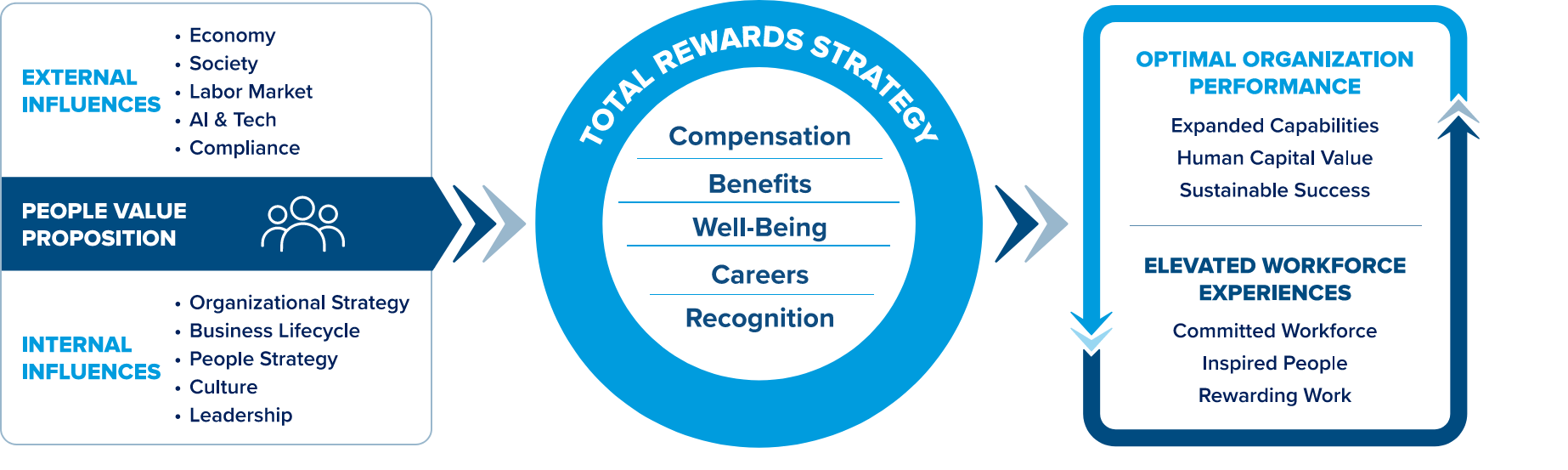
Some HR and people leaders consider them separate elements. But these components are truly connected, and the connective tissue is recognition.
Recognition isn’t just about acknowledging good work. It’s the mechanism that activates the Pygmalion Effect across almost every other dimension of your rewards offering. It’s an amplifier, and makes the other components actually land. When recognition is strategic, consistent, and tied to expectations and development:
- Engagement, performance and retention increase.
- People are more likely to feel the value of your entire TR package.
Making This Real in Your Organization
How do you make this happen within our organization? How do you systematically activate the Pygmalion Effect and weave it through your TR strategy? Here are a few thoughts:
- Be intentional about who you’re betting on. Create a high-potential identification process. Use real data — competency assessments, peer feedback, manager input. And, tell people they’ve been identified.
-
Build recognition into the rhythm, not just special events. This is where most organizations make mistakes. Annual recognition ceremonies are nice (beautiful even), but they’re not enough. Weave recognition into the natural flow of work. Consider how to:
- Call out wins in real time, not weeks later.
- Make peer recognition a habit, not a formal program.
- Celebrate progress, not just results.
- Share stories across the organization, letting people know what others are achieving.
- Make visible how high-potential employees are growing.
- Tie recognition to growth, not just output. The most powerful recognition happens when you recognize someone’s growth. It’s forward-looking and belief-generating.
- Make it visible and amplified. When someone gets recognized, other people should hear about it. It creates visibility for what excellence looks like.
Why You Should Actually Care About This Now
You’re probably thinking, “This is nice organizational psychology theory. But what changes in the real world? What’s the return on investment? Why should I spend time and energy on this?”
Organizations that invest in recognition generally see:
- Some employees blossom from good performers to high performers.
- Retention rises because employees typically feel more valued and trusted.
- Promotion timelines compress because people develop faster with accelerated opportunities and recognition.
- Culture shifts from “people doing jobs” to “people building careers.”
- Engagement numbers improve, particularly in areas like growth, manager relationship and purpose.
- Internal mobility grows because people increasingly see themselves in different roles.
- The TR value proposition becomes “real” since people are more apt to experience and feel that value.
- The external employer brand improves because people are more likely to share their development experience.
Sometimes the biggest difference in employee performance is simply whether someone believes that employee can succeed.
Editor’s Note: Additional Content
For more information and resources related to this article, see the pages below, which offer quick access to all WorldatWork content on these topics:

#1 Total Rewards & Comp Newsletter
Subscribe to Workspan Weekly and always get the latest news on compensation and Total Rewards delivered directly to you. Never miss another update on the newest regulations, court decisions, state laws and trends in the field.