What can we help you with today?
Filter by Topics
Filter by Category
Found 950 results

Workspan Daily
02/10/2022
This model should include the five-year
history, as well. 2.
Author(s):

Journal Article
03/01/2021
“WHO Healthy Workplace Framework and Model: Background and Supporting Literature and Practices.”
Author(s):
Journal Issue
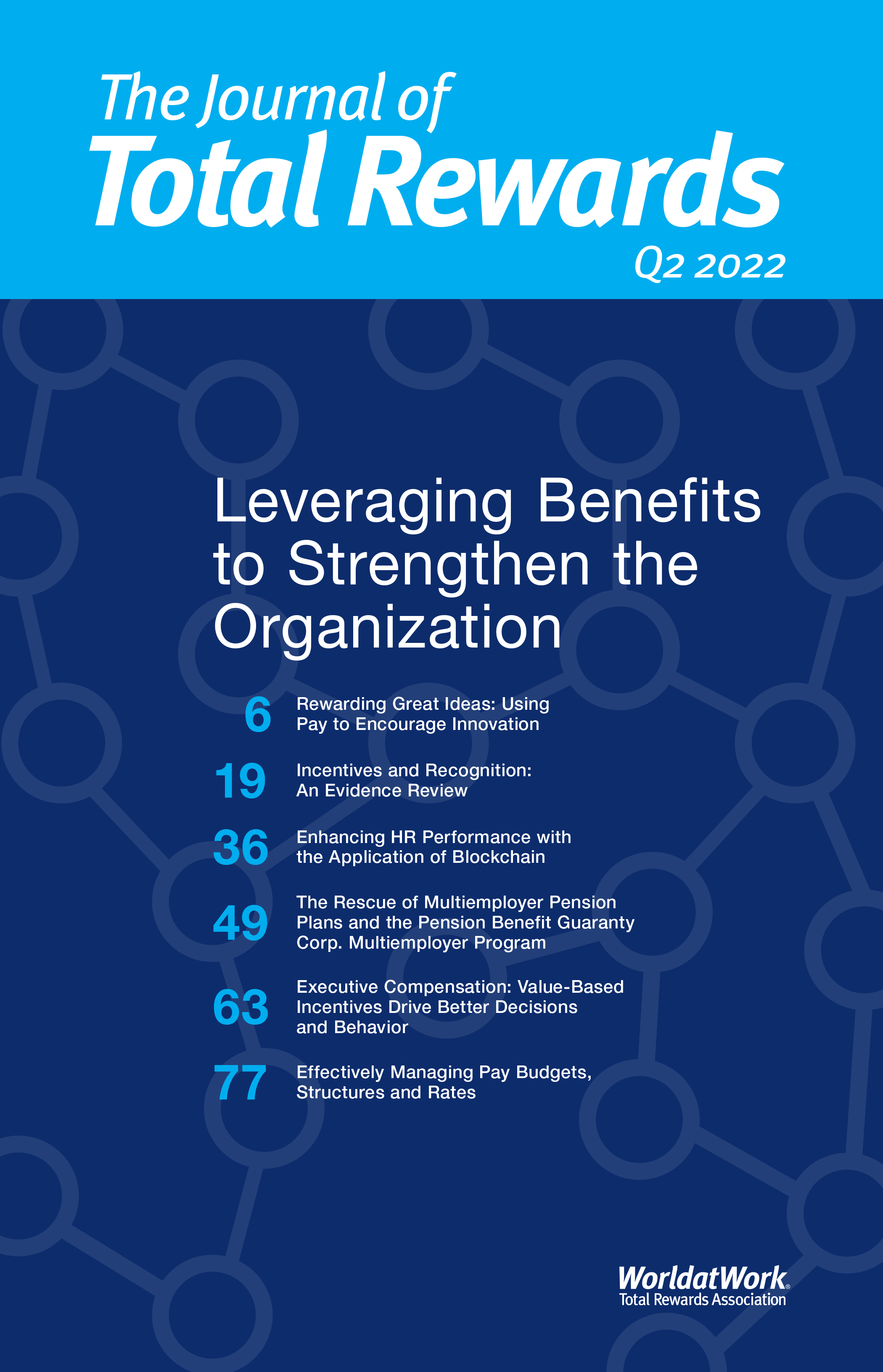
The Journal of Total Rewards
Second Quarter 2022 | Volume 31 | No. 2
This edition focusses on leveraging benefits to strengthen the organization.
.jpg)
Workspan Magazine
08/08/2024
When you consider that sales compensation plan models have remained largely unchanged over the past 40 years, it’s no wonder that the plan design process and other plan components are often seen as outdated and inefficient.
Author(s):

Workspan Daily
10/06/2022
Companies will slow the move to a “value delivery” model.
Author(s):


Journal Article
05/15/2025
AI for Skill-Based Workforce Planning
AI helps organizations strategically plan for necessary skills, ensuring the workforce remains competitive and well-compensated:
;Reasoning models can analyze emerging skill demands, allowing companies to proactively invest in training and upskilling initiatives.;
;AI assigns employees to projects based on skill assessments, optimizing talent allocation.;
Example:
A reasoning model is fed with information about upcoming projects and the current workforce distribution along with employees' skill sets.
Author(s):

Workspan Magazine
06/13/2024
Author(s):

Course
To get the most out of this course, you will need to have working knowledge of the WorldatWork Total Rewards model, compensation fundamentals of a Total Rewards strategy, labor regulations, base pay systems, variable pay programs and market pricing.

Workspan Daily
08/26/2025
In this case, you can use a hybrid incentive solution with partial payment upfront based on the committed bookings and the remaining payment tied to revenue as the solution is used.;
If you have multiple types of deal structures, consider developing a contract classification system (e.g., Tier 1, 2, 3) based on commitment level and revenue realization risk, and link incentive payout practices to those tiers.
2.
Author(s):