For WorldatWork Members
- Cannabis Conundrum — To Test or Not to Test, Workspan Magazine article
- Compliance Checklist When Vetting a New State for Business Expansion, Workspan Daily Plus+ article
- Anatomy of a Wellness Program: Ensuring Regulatory Compliance, Workspan Daily Plus+ article
- State Laws Comparison Tool, tool
- U.S. Compliance Poster Builder, tool
For Everyone
- Court: Cannabis Treatments Not Reimbursable Under Workers’ Comp, Workspan Daily article
- As More States Legalize Marijuana, Where Should Employers Stand with Drug Testing? Workspan Daily article
- Wealth Through Health: The Benefits of a Stronger Well-Being Program, Workspan Daily article


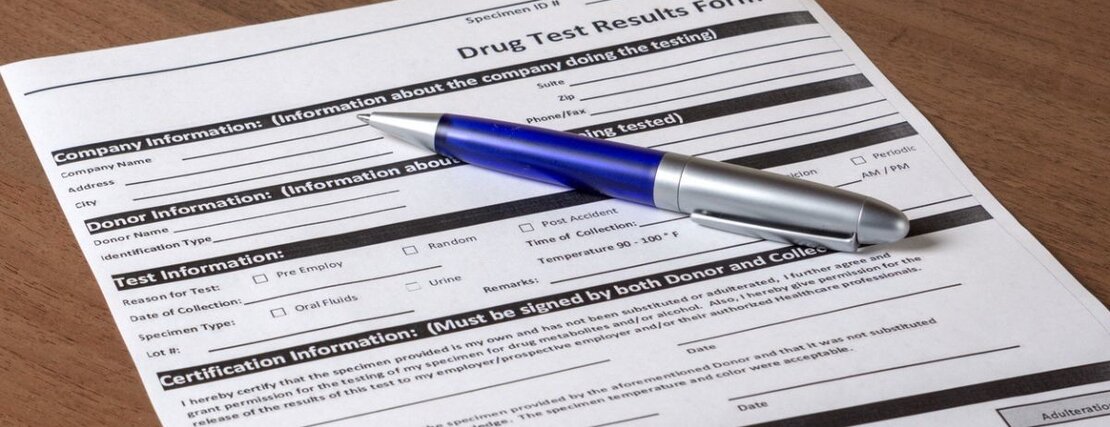
In the U.S., a complicated tangle of federal and state drug laws has left employers in a haze just as a new Quest Diagnostics study of hair samples found nearly 1 in 5 American workers tested positive for drug use last year.
For employers, this means there’s a growing need to look beyond a simple positive or negative drug test result and understand the nuances of workforce substance use, said Jason Hudson, PhD, the scientific director and laboratory director of workforce solutions at Quest Diagnostics, a New Jersey-based business that provides testing and lab services.
“It’s about recognizing that a significant portion of the workforce, 19.1% by hair testing, shows patterns of recurring drug use,” he said, pointing out that figure is a 46% increase compared to 2021 (13.1%). “This challenges HR teams to think more strategically about how they can maintain a safe and healthy work environment.”
This task can be easier said than done.
Access bonus Workspan Daily Plus+ articles on this subject:
- Drugs and the Workplace: What Steps Should (and Shouldn’t) You Take?
- ‘Are You High?’ Helping Managers Properly Act on Reasonable Suspicion
Higher Positive Test Results
The Quest Diagnostics data shows that, over the past five years:
- Overall hair test positivity for marijuana increased 58.9% (15.1% in 2025 vs. 9.5% in 2021).
- Pre-employment hair test positivity for marijuana increased 49.5% (15.1% vs. 10.1%).
- Random hair test positivity for marijuana increased 14.8% (21.0% vs. 18.3%).
In addition to marijuana, hair test positivity for other substances increased:
- Cocaine positivity was 4.0% in 2025 (vs. 2.7% in 2021).
- Methamphetamine was 2.5% (vs. 2.1%).
- Amphetamine, which can include prescription medications, was 2.3% (vs. 1.8%).
Legal Limbo
Given these trends, what can HR professionals do to protect the business and its employees? The answer can be complex and should account for both employment law and human biology.
Consider three points:
- On the federal level, the Americans with Disabilities Act (ADA) provides employment protections for qualified individuals — such as those in supervised drug recovery or rehabilitation programs who are no longer using illegally, as well as individuals with a past record of addiction.
- Illicit drugs are not legal in the U.S., but that requires some explanation.
- More and more U.S. states have legalized marijuana use, either for recreational or medical purposes.
Toward the first point, under the ADA, a diagnosable substance use disorder or drug addiction is considered a disability if it substantially limits one or more major life activities. The law also protects individuals who are not using drugs but are wrongly regarded as illegal drug users.
Toward the second point, under the federal Controlled Substances Act, the U.S. government classifies drugs, substances and certain chemicals used to make drugs into five distinct categories, or schedules, based on their medical value and potential for abuse. Schedule 1 is the most restrictive, based on the drugs’ inherent risks. Schedule 5 is the least restrictive, based on the low inherent risks. Ensure your drug-testing enforcement protocols account for:
- Illegal drugs. Recreational drugs like heroin, LSD and ecstasy are strictly prohibited under Schedule 1 because they have a high potential for abuse and no accepted medical use.
- Prescription drugs. Drugs like morphine, amphetamines and depressants are legal only when prescribed by a licensed doctor and dispensed through authorized channels.
- Cannabis. Marijuana remains an illegal Schedule I substance under federal law. However, there is plenty of debate over legalization.
Toward the third point, as of the publication of this article:
- 24 U.S. states (plus Washington, D.C.) have fully legalized marijuana for adult recreational use. The states include: Alaska, Arizona, California, Colorado, Connecticut, Delaware, Illinois, Maine, Maryland, Massachusetts, Michigan, Minnesota, Missouri, Montana, Nevada, New Jersey, New Mexico, New York, Ohio, Oregon, Rhode Island, Vermont, Virginia and Washington.
- 17 states have comprehensive medical marijuana laws but have not legalized adult recreational use. This includes: Alabama, Arkansas, Florida, Georgia, Hawaii, Kentucky, Louisiana, Mississippi, Nebraska, New Hampshire, North Dakota, Oklahoma, Pennsylvania, South Dakota, Texas, Utah and West Virginia.
- 8 states (Indiana, Iowa, Kansas, North Carolina, South Carolina, Tennessee, Wisconsin and Wyoming) have limited laws allowing only low-tetrahydrocannabinol (THC) or cannabidiol (CBD) products.
Some states are even starting to prohibit or restrict marijuana drug testing, said Kathryn Russo, a principal at the Jackson Lewis law firm.
“For example, in New York, employers may not conduct any marijuana drug testing,” she said. “In California, employers may test for marijuana only if the drug test device can detect only the ‘psychoactive components’ of marijuana.”
Russo also advised employers to consider that a positive drug test does not necessarily correlate with drug impairment. She said a drug such as marijuana serves as a good example, since it can stay in the fatty tissues of the body for days or even weeks after usage.
“This means that the tested individual may test positive on a workplace drug test even when they did not use at work and were not impaired at work,” she said.
Splitting Hairs
As a testing method, hair testing generally offers a longer window of detection (approximately 90 days), so it may be helpful to employers when conducting pre-employment testing and random testing, assuming that hair testing is legal in the particular state.
Hair testing should not be used for reasonable suspicion testing or post-accident testing because hair grows very slowly, Russo said.
“So, a hair test cannot detect very recent drug usage or current impairment,” she said.
After the Test
When someone fails an employer’s drug test regardless of method, some states have written notice requirements, or may require the employer to offer the tested individual an opportunity to have the original specimen retested at a different laboratory.
Russo said employers that conduct drug testing should use a medical review officer (required by law in some states) who is a physician with expertise in analyzing drug test results.
“The [officer] will contact the applicant or employee confidentially when there is a positive test result,” she said. “[This can] allow the applicant or employee an opportunity to explain the result — for example, the individual may use prescription medication.”
Russo said that in states such as Iowa (for first-time positive alcohol test results) as well as Maine, Minnesota, Rhode Island and Vermont (for first-time positive drug or alcohol test results), employers are legally required to offer rehabilitation or a last-chance agreement before firing someone for a positive drug or alcohol test result. As a caveat, she said this is not applicable to Department of Transportation drug and alcohol test results (e.g., for certain jobs in the trucking, maritime, aviation, rail, transit and pipelines industries).
Regardless of state or industry, change seems to be the only constant when it comes to identifying drug use in the workplace, said Quest Diagnostic’s Hudson.
“It continues to be an evolving environment,” he said. “Therefore, we always advise employers to engage with their legal counsel to set policies for their business.”
Editor’s Note: Additional Content
For more information and resources related to this article, see the pages below, which offer quick access to all WorldatWork content on these topics:

#1 Total Rewards & Comp Newsletter
Subscribe to Workspan Weekly and always get the latest news on compensation and Total Rewards delivered directly to you. Never miss another update on the newest regulations, court decisions, state laws and trends in the field.