What can we help you with today?
Filter by Topics
Filter by Category
Found 650 results
Workspan Magazine
11/03/2023
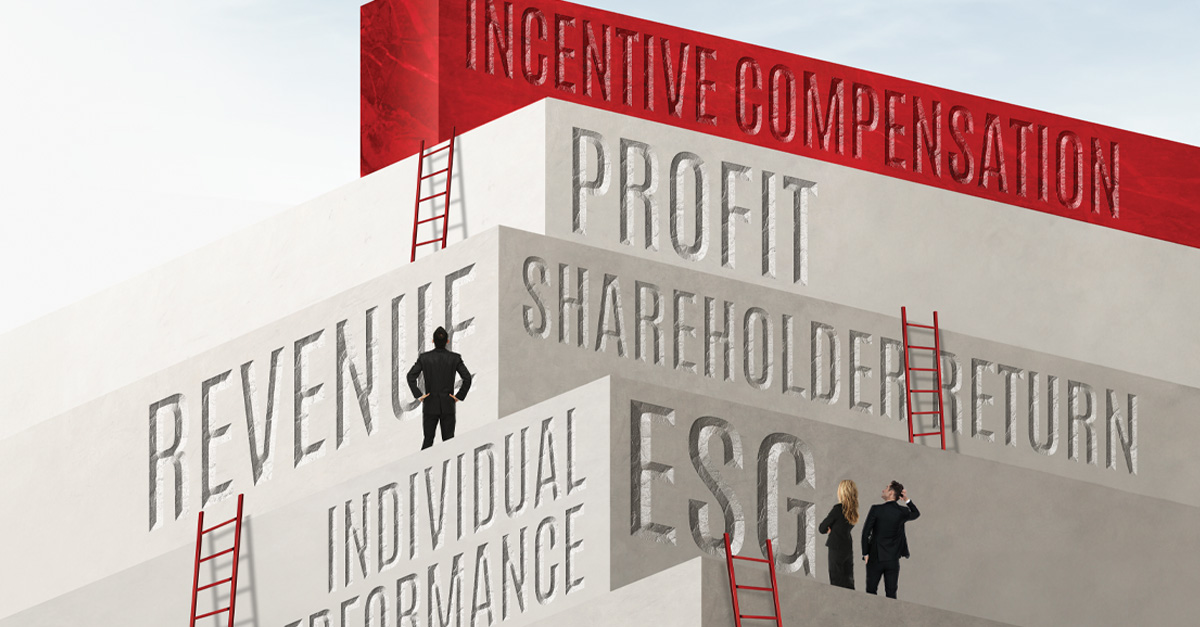
According to our " FTSE 100: Directors’ Remuneration Trends 2021 ," the number of firms in Europe using an ESG metric in a long-term incentive plan increased from 15% last year to 32% in the latest set of annual reports.
Author(s):

Workspan Daily
08/09/2023
CEOs were required, on average, to roll over 25% of their sale proceeds into the new PortCo investment while direct reports to the CEO were typically required to roll over 10% to 15% of their proceeds.
Author(s):

Workspan Magazine
10/03/2024
The solution: Framery, which has 430 employees in 15 countries, has implemented the following practices to ensure men and women are compensated at equal rates, as reported by
CNBC :
;Conduct a pay audit twice a year.
Author(s):

Journal Article
07/04/2022
This is because the most common range widths have midpoints that are 15%-20% higher than the minimum.
Author(s):

Workspan Magazine
10/01/2025
From July 2022 through June 2024, the organization used 15-minute “huddles” to share and practice targeted coping strategies.
Author(s):
Workspan Daily
03/23/2026
This generation is shaped by what they’ve seen their parents go through with past recessions and layoffs, as well as by all of the messaging HR professionals have sent over the past 15 years about saving for retirement.
Author(s):

Journal Article
12/04/2023
Management Science 60(8):1861–1883.
Author(s):

Workspan Magazine
08/08/2024
Automatic enrollment becomes mandatory in 2025 for retirement plans established after late 2022, and new plans also must automatically escalate participants’ deferral rate by 1% a year, with maximums of 10% to 15%.
Author(s):

Workspan Daily
03/24/2025
The report also found:
;Less than 10% of women have a formal mentor at work, compared to 15% of men.;
;38% of women say their value is recognized through daily work visibility, while men feel valued through corporate culture (47%) and values (51%).;
;Only 28% of women feel their corporate culture actively supports them.; Access a bonus Workspan Daily Plus+ article on this subject:
;Take Steps to Invest in Women Workers’ Success ; “Women face several barriers to career growth, including structural, cultural and systemic challenges,” said Ruth Thomas, a pay equity strategist at Payscale.
Author(s):

Workspan Daily
09/05/2025
Uber Eats to Fork Over $15M to Settle Pay Dispute
Seattle’s Office of Labor Standards (OLS)
announced Aug. 26 it had reached a $15 million settlement with Uber Eats after the city alleged the food delivery service violated multiple worker protection laws.
Author(s):