For WorldatWork Members
- What Makes Gen Z Valuable to Employers? Workspan Daily Plus+ article
- Attracting New Graduates: A Readiness Assessment, Workspan Daily Plus+ article
- How to Understand What Matters Most to Job Candidates, Workspan Daily Plus+ article
- Gen Z Is Reimagining Leadership: How to Play on Their Terms, Workspan Daily Plus+ article
- How TR Pros Can Take a Social Media Approach to Benefits Communication, Workspan Daily Plus+ article
- What Other Generations Can Learn from Gen Z’s Retirement Attitudes, Workspan Daily Plus+ article
- Pivot on Pay: Getting Creative to Attract and Incentivize Talent, Workspan Magazine article
For Everyone
- Total Rewards ’26, conference
- What Gen Z and Millennials Want: How to Attract and Retain Them, Workspan Daily article
- A Pundit Called Gen Z ‘Unemployable.’ What’s Employers’ Response? Workspan Daily article
- How Gen Z is Redefining Total Rewards, Workspan Daily article
- Gen Zers and Millennials Are Increasingly Rejecting Corporate Loyalty, Workspan Daily article
- Young Workers Opting for the Job-Hop Instead of the Climb, Workspan Daily article


Generation Z (those born between 1997 and 2012) is redefining how compensation and benefits are understood in today’s workplace. Are you vibing with them? Locked in to what they think hits different? IYKYK.
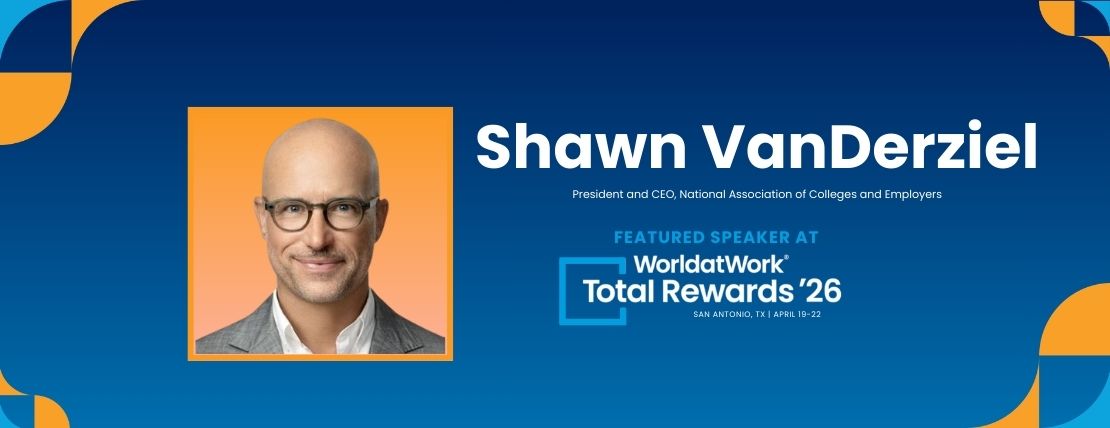
Consider Shawn VanDerziel your Gen Z translator. This talent maven is the president and CEO of the National Association of Colleges and Employers (a U.S.-based nonprofit professional organization that bridges higher education and the workforce) and an HR practitioner who spent more than two decades leading people strategy at Chicago’s Field Museum (including more than seven years as its chief HR officer).
VanDerziel will share research and insights on decoding Gen Z at WorldatWork’s Total Rewards ’26 conference, which runs April 19-22 in San Antonio, Texas.
In his April 21 session, titled “Myth-Busting Gen Z: Data-Driven Insights to Build Your Comp and Benefits,” VanDerziel will:
- Uncover what recent college graduates truly value;
- Examine critical areas shaping their decisions (e.g., starting salary benchmarks, benefits priorities, work location preferences, relocation trends, cultural alignment); and,
- Help HR and total rewards (TR) pros better align their offerings and experiences with the expectations of Gen Z and new college graduates.
Workspan Daily editor Paul Arnold recently interviewed VanDerziel to unravel the secrets, issues and opportunities surrounding this workforce demographic.
Check out Workspan Daily’s on-site coverage of Total Rewards ’26:
- There Is a Distinct Power in Knowing What Matters to Your Workers
- WorldatWork, HRCI Leaders Kick Off Program Exploring Work’s New Era
- Why Bravery Is a Formal Habit HR Pros Need to Build and Lean Into
- Cha-Ching: How to Transform HR into a Profit Center
Check out Workspan Daily pre-conference coverage on Total Rewards ’26:
- To Enhance Employee Experience, Lean into Integrity, ‘Radical Honesty’
- Conference Session Takes Community Approach to Solving HR Problems
- BIG Ideas: Learn How to Get the Most Out of a Small HR Budget and Team
- Recognize that Employee Recognition Needs Some Attention
- Hard Choices, Soft Solutions: A Considerate Approach to Compensation
- Making the Leap to a Pay-for-Performance Approach that Works
Arnold: Gen Z is a mystery to most employers … and most HR and TR pros. Recent research articles have labeled them everything from “unemployable” to “complicated” to “the most awesome generation there is” (thanks, Forbes). Why is this generation so hard to pin down and definitively figure out?
VanDerziel: I love this question because, like every generation before them, Gen Z is complex. They’re not hard to understand; they’re just not a monolith.
When we research and survey their lived experiences, preferences and needs, a clearer and more consistent picture begins to emerge. The challenge comes when we generalize based on a few visible examples or anecdotes. It’s easy to be misled or to project our own assumptions about what this generation values.
Gen Z is different in meaningful ways, and they are already reshaping the landscape of work. But the best way to demystify the generation, and make better decisions as employers, is to rely on credible research and real insights rather than stereotypes.
When organizations take the time to understand Gen Z through reliable data, they gain a clearer view of what matters most to this emerging workforce. That understanding ultimately leads to smarter decisions about benefits, workplace practices and total compensation strategies.
Arnold: Toward the focus of this particular WorldatWork conference, how, in your opinion, is Gen Z redefining the traditional understanding of compensation and benefits?
VanDerziel: Gen Z is and will continue to redefine not only what and how we deliver comp and benefits, but also how we work. We have found that job stability is the attribute college graduates want most in a job — ranking ahead of a healthy workplace culture and friendly coworkers. While a high starting salary ranks lower on the Class of 2025’s list of desired attributes, students were clear that compensation and benefits still matter greatly.
In fact, annual salary increases ranked as the most important ongoing benefit, followed by employer-paid medical insurance, a company-matched 401(k) program, dental insurance, and family-friendly benefits such as family leave and elder care. This tells us Gen Z is thinking about long-term financial security and career sustainability, not just the starting paycheck. At the same time, they are expanding the traditional definition of compensation and benefits to include quality of life. Flexibility, particularly hybrid work environments in the long term, has become a key factor in how they evaluate opportunities. Mental health support, access to wellness resources and benefits that promote overall well-being are also increasingly important.
Taken together, this points to a generation seeking a more holistic employment value proposition: financial stability, meaningful benefits, and a work-life balance that allows them to succeed professionally while maintaining their health, relationships and personal fulfillment.
Arnold: What’s the secret sauce to recruiting this workforce group? How might you have to go about things differently with them?
VanDerziel: Gen Z wants to know that employers see them as individuals and understand that work is an important part of life, but not their entire life. Organizations that can demonstrate stability, supportive leadership and benefits that enable a healthy work-life balance will be far more successful in attracting this generation.
Equally important is a clear commitment to learning and development. Gen Z is highly focused on building both durable and technical skills that will help them succeed not only in their current role but throughout their careers. They understand the value of continuous learning, so employers should highlight training, mentorship and growth opportunities throughout the recruitment process.
We also know internships remain one of the most effective pathways for recruiting this generation. When organizations invest in strong internship programs, they can convert as many as 62% of interns into full-time hires. Few recruitment strategies deliver that kind of return, which makes internships a powerful entry point for building early relationships with Gen Z talent.
Arnold: Gen Z has plenty of expectations about TR, which is partially driven by their consumption of online information and their access to and utilization of artificial intelligence (AI). How might HR and TR pros work with this workforce group to separate myth from reality when it comes to, for instance, compensation?
VanDerziel: Gen Z is entering the workforce with unprecedented access to information about compensation — from social media and online salary platforms to AI tools that can generate quick comparisons. While that access can be helpful, it also can create confusion or unrealistic expectations. The most effective way for organizations to separate myth from reality is through transparency and education. This generation expects transparency and wants clear expectations.
Employers should be upfront about salary ranges, benefits and how TR packages are structured. Students and early career candidates are often hesitant to ask these questions early in the process, so organizations can build trust by proactively sharing this information rather than waiting to be asked.
Context also matters. Compensation only tells part of the story, so employers should help candidates understand the full value of their TR package, including benefits, retirement contributions, development opportunities and flexibility. Providing information about the cost of living where roles are located also can help candidates more accurately assess what a compensation package means for their day-to-day financial well-being. Our research shows cost of living is one of the top factors students consider when evaluating where they want to work.
Ultimately, organizations that clearly explain how pay is determined — and regularly review salaries and benefits to keep pace with inflation, market conditions and evolving employee needs — will build greater credibility with Gen Z and help candidates make more informed decisions.
Arnold: What specific benefits do recent college graduates truly value compared to older generations? What gets them in the door? And, similarly or differently, what keeps them employed with you?
VanDerziel: Three of the starkest differences we’ve seen in recent years is that Gen Z doesn’t place a high starting salary at the top of their rankings and consistently places 401(k) benefits in top three benefits they are looking for. This generation is shaped by what they’ve seen their parents go through with past recessions and layoffs, as well as by all of the messaging HR professionals have sent over the past 15 years about saving for retirement. That messaging is finally paying off.
Additionally, past generations wouldn’t have placed mental health benefits toward the top of the list of benefits like Gen Z does. The stigmas around mental health and support are beginning to diminish, and this generation understands the value of their total well-being and seeking assistance when needed.
Arnold: How can organizations update their benefits packages to align with Gen Z’s holistic view of wellness?
VanDerziel: Gen Z tends to view wellness much more holistically than previous generations. For them, well-being isn’t limited to healthcare; it also includes financial stability, mental health, career growth, and the ability to maintain a healthy balance between work and life.
Because of that, organizations should think of benefits packages as dynamic rather than static. Regular reviews, supported by employee feedback and data, help ensure offerings remain relevant as workforce expectations evolve. What mattered five years ago may not fully address the needs of today’s early career workforce.
Employers also should think broadly about the types of support they provide. Competitive compensation and healthcare remain essential, but Gen Z also is looking for benefits that support mental health, financial well-being, professional development and flexibility in how work gets done. When organizations build benefits packages that recognize employees as whole people — not just workers — they are far more likely to attract and retain this generation.
Arnold: What do you see as some of the best strategies for creating a “Gen Z-ready” workplace?
VanDerziel: It starts with transparency and authenticity. This generation wants to understand what it’s like to work somewhere before they accept a role. That’s where internships come in. Beyond that, employers that clearly communicate their culture, expectations, growth opportunities and approach to work-life balance will have an advantage.
Equally important is creating an environment where early career employees feel supported and able to grow. Structured onboarding, mentorship programs, regular manager check-ins and opportunities for continuous learning all signal an organization is invested in employees’ long-term success.
Connection and belonging also matter greatly to this generation. Initiatives such as employee resource groups, professional development programming and wellness resources can help foster a sense of community and engagement.
Check out Workspan Daily’s coverage of the Total Rewards ’25 conference:
- Might a Sales Mindset Be Your Key to Total Rewards Success?
- The Monumental Mission of Meaningful Mentorships
- Proactive TR Pros See ‘Train’ of Change Coming, Take Steps to Act
- The Keys to Creativity and Driving Innovative Total Rewards
- The Pros and Cons of Giving Managers Discretion on Merit Increases
- Using Analytics, Innovative Framework to Transform HR/Total Rewards
- How An Industry Leader Sees Technology Transforming Total Rewards
- Biopharma Compensation Leader Has Put AI Under the Microscope
Editor’s Note: Additional Content
For more information and resources related to this article, see the pages below, which offer quick access to all WorldatWork content on these topics:

#1 Total Rewards & Comp Newsletter
Subscribe to Workspan Weekly and always get the latest news on compensation and Total Rewards delivered directly to you. Never miss another update on the newest regulations, court decisions, state laws and trends in the field.