For WorldatWork Members
- Maximizing the Power of Decision Making, Workspan Magazine article
- Adaptability Quotient: The New Currency of Leadership Potential, Workspan Daily Plus+ article
- ‘Foundationally Changed’: Welcome to the New Era of Leadership, Workspan Daily Plus+ article
- Two TR Leaders Provide a Personal Take on Their 2026 Priorities, Workspan Daily Plus+ article
- Developing Critical Thinking in Leaders, Journal of Total Rewards article
- Total Rewards Model: A Guide, tool
- 2026 Priorities of Total Rewards Leaders, research
For Everyone
- To Grow Future-Ready Leaders, You Need to Think, Develop Differently, Workspan Daily article
- The Keys to Creativity and Driving Innovative Total Rewards, Workspan Daily article
- Alignment, Market Competitiveness Are TR Leaders’ Top 2026 Priorities, Workspan Daily article
- Q&A: How Can TR Leaders Position Themselves as Performance Partners? Workspan Daily article
- How HR Leaders Earn Trust and Drive Executive Conversations, on-demand webinar
- Incentive Compensation Maturity: How Leading Organizations Build Trust, Alignment, and Improvement Over Time, on-demand webinar


“The antidote to uncertainty is not certainty. It’s clarity.”
— Todd Henry, author, podcaster and Total Rewards ’26 speaker
As an HR/total rewards (TR) leader in today’s volatile business environment, you are likely expected to balance compliance, cost pressure and employee expectations while still driving meaningful impact. Whether you’re redesigning rewards strategies, navigating workforce change or influencing leaders without formal authority, the moments that matter most often demand brave decisions and creative thinking — and they rarely come with extra time to prepare.
How do you pull it off? Todd Henry has some ideas.
As an author (“The Accidental Creative” and six other books), podcaster (“Daily Creative“), speaker and consultant/advisor, this self-proclaimed “arms dealer for the creative revolution” helps leaders like you develop habits that elevate personal bravery, focus and brilliance.
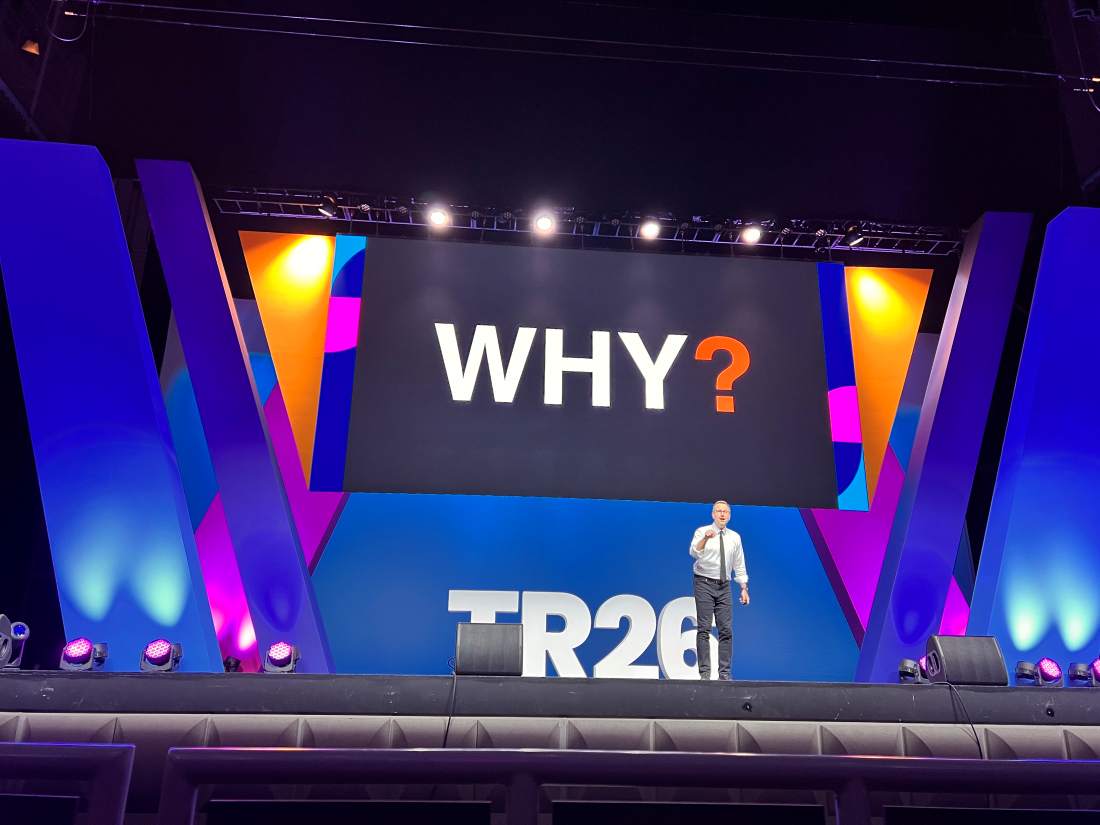
During his main stage address titled “The Brave Habit: Leading When the Stakes Are High,” on Monday, April 20, at WorldatWork’s Total Rewards ’26 conference in San Antonio, Texas, Henry explored:
- Why waiting for the “right moment” is risky;
- How building bravery as a habit can allow you to respond decisively when stakes are high;
- Where the courage to act comes from when results are expected now;
- Key factors that enable brave, brilliant work; and,
- The types of bravery you should practice every day to make sound decisions, challenge the status quo and lead with confidence.
Before engaging with the event’s 2,000-plus attendees, Henry connected with Workspan Daily for a conversation on thinking creatively, navigating uncertainty, and leading with clarity and courage.
Check out Workspan Daily’s on-site coverage of Total Rewards ’26:
- Why You Need to Be Attuned to Your Culture’s ‘Silent Signals’
- There Is a Distinct Power in Knowing What Matters to Your Workers
- WorldatWork, HRCI Leaders Kick Off Program Exploring Work’s New Era
- Your Voice and Vision May Be Your Most Important HR Leadership Tools
- Cha-Ching: How to Transform HR into a Profit Center
- What’s Your Role in Making AI a Responsible HR/TR Tool?
Check out Workspan Daily’s pre-conference coverage of Total Rewards ’26:
- To Enhance Employee Experience, Lean into Integrity, ‘Radical Honesty’
- Conference Session Takes Community Approach to Solving HR Problems
- BIG Ideas: Learn How to Get the Most Out of a Small HR Budget and Team
- Recognize that Employee Recognition Needs Some Attention
- Hard Choices, Soft Solutions: A Considerate Approach to Compensation
- Making the Leap to a Pay-for-Performance Approach that Works
- Are You Speaking Gen Z’s Language When It Comes to Total Rewards?
WD: For HR and TR leaders, why is — perhaps now more than ever — waiting for the “right moment” a particularly risky strategy?
Henry: The reality is, “the right moment” is always a myth. There is never perfect timing. We can never be certain that any decision we make is going to work out for the best. We can make a good decision that leads to a bad outcome, and we can make a bad decision that somehow leads to a good one. But I think many leaders are quietly waiting for the moment when they can guarantee a good outcome, and by the time that moment arrives, it’s almost always too late to act on their intuition.
What we need instead is to take smart, strategic risks that move us in the direction we believe is right for the organization, even when the outcome is unclear. The antidote to uncertainty is not certainty. It’s clarity. When we pursue clarity about what we’re building and why, we can communicate expectations to our team and ensure everyone understands both the vision we’re pursuing and their role in bringing it about. And when that happens, it raises the water level for bravery across the entire organization.
WD: How would you define “brave work,” and why is it so important now for business leaders (in general) and HR leaders (in particular)?
Henry: Bravery is quite simply integrity under pressure. It means doing what you know to be right, even when it might cost you something. Unfortunately, many leaders play it safe. They make decisions that may turn out well for them personally but ultimately compromise trust within the organization and send a subtle signal to everyone else that, “You’re on your own.”
Instead, we need to send a different signal: “We’re the kind of organization that does the right thing even when it’s challenging, and that pursues a clear and coherent vision even when we’re uncertain how we’re going to get there.” That might look like stepping in to defend principles that are important to us even when they conflict with business objectives. It might mean defending people who have no position to defend themselves, or encouraging teammates and ensuring they have the resources they need to accomplish their mission even when we get none of the credit. It might mean standing in the gap and protecting our team’s time and resources so they can accomplish what we’ve asked them to do. Any and all of these are small but significant acts of bravery because they require us to follow our principles even when those principles are under pressure.
WD: How does “brave work” differ from “bravado”?
Henry: Bravery always counts the cost. It understands the potential consequences of failure but takes action anyway because the cost of inaction outweighs the potential downsides. Bravado is something else entirely. It’s uncalculated, often stupid risk. It’s posturing. It’s pretending to be brave and strong, but in reality, it often masks a deep insecurity.
Some of the bravest people I’ve met in life and in business are those who appear unassuming but who are quietly holding the entire organization together through small acts of brave integrity. They call the least attention to themselves, and I think that is, in many ways, heroic.
WD: What does your research show are key factors (or qualities) that enable brave, brilliant work, even when results are expected immediately?
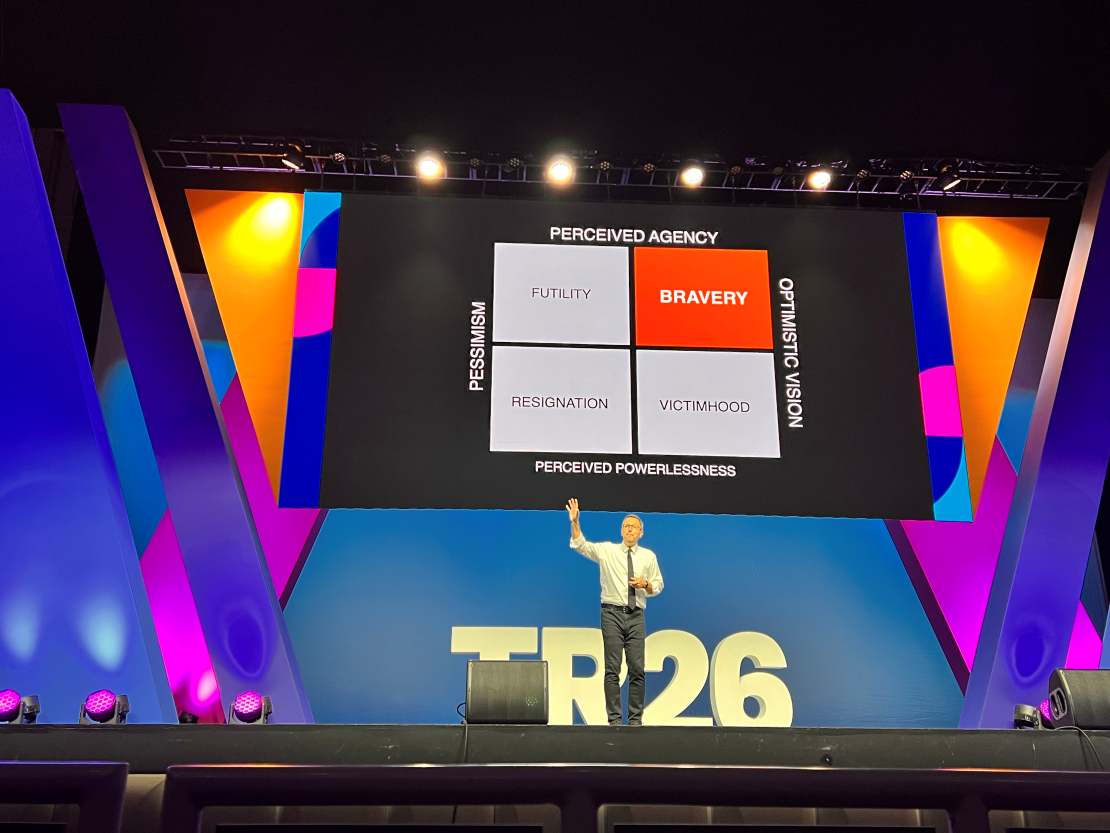
Henry: There are two primary factors that tend to lead to brave action within organizations. The first is a clear and optimistic vision of what the future could look like. We need something to navigate toward, and that point of navigation needs to be clear and apparent. On the other hand, a pessimistic outlook implies that, no matter what we do, there’s no better future available to us — and pessimism squelches bravery.
The second is a sense of perceived agency to help bring about that future. When we believe there are actions we can take, even small ones, that begin to move us or the organization toward that better possible future, it increases the likelihood of brave action. But when we perceive ourselves to be powerless, when we believe there’s nothing we can really do to help bring it about, even if we can see a better future, people tend to slip into resignation.
As leaders, a significant part of our role is consistently painting a clear vision of where we’re going and what it will look like when we get there and speaking agency into those around us so they understand their part, however small, in helping bring it about. When both of these conditions are met, brave action is far more likely to occur.
 WD: What are the three types of bravery HR leaders need to practice in order to challenge the status quo and lead with confidence?
Henry: There are three essential types of bravery — or, as I call them, three precipices — that we stand at each day.
The first is the bravery to act. There are small things we know we need to do that we’ve been deferring or hoping will just resolve on their own. They rarely do. These situations almost always require some sort of intervention on our part, and the longer we wait, the harder that intervention becomes.
The second is the bravery to let go. We can slip into comfort or complacency because we like the way things have been, even as the environment is changing around us. We need to be brave enough to release the way things have been so we can embrace the way things could be.
The third is the bravery to wait. We often think of bravery as action — moving forward, trying new things, having difficult conversations. But sometimes, the bravest thing we can do is plant our feet and wait until we have a clear, optimistic vision or until we believe we’ve developed the agency to act, even as others are rushing in around us.
Each of these three kinds of bravery is essential if we want to lead effectively and take our organization into the future with clarity and confidence.
WD: What are some practical, daily habits that HR leaders can adopt to build a “reservoir of courage” for moments that matter?
Henry: Bravery is developed through daily practice. We often think it’s about mustering one giant act of will, but those who act in the big moments are typically people who have been consistently building a reservoir of courage in their daily life.
One practice I recommend is blocking time each week to look at your upcoming meetings, commitments and decisions and asking yourself: What vision do I have for this relationship, for my team, for this project? Then, ask what agency you have to help bring that vision about, and commit ahead of time to the risks you know you’re going to need to take. The goal is to make those decisions before you’re in the room, not in the moment when everything feels existential.
We never want to be considering brave action for the first time under pressure. We want to get ahead of those decisions, so we’ve already counted the cost, and we know what we’re going to do when the moment comes.
By building this discipline into our lives, we create space to think deeply about what matters to us when we don’t feel threatened, and we’re able to act on those convictions when we do.
WD: What is “island hopping” and how might HR leaders use it to bring their team along with a vision, especially when the leader has more information than the team?
Henry: Because leaders have access to more information, they are often far ahead of where their team is, both in terms of mindset and understanding of the circumstances. Think of it like an archipelago. The leader might be on Island 7. They’ve already hopped all the way from Island 1 because they have more information and they’ve been thinking about the problem for a long time. So, they’re standing on Island 7, screaming, “Hey, everybody, come over here!” But the team doesn’t even understand how to get from Island 1 to Island 2, let alone Island 1 to Island 7.
What we must do is be willing to go back. Be patient. Go all the way back to Island 2 and help them navigate from one to two, two to three, three to four, and so on. We must be willing to explain our process and help them understand not just what the decision is but why we made it — to let them into our thinking so they can make the journey with us.
WD: How can these leaders apply the concept of “brave habits” when redesigning strategies under significant cost pressures?
Henry: This really gets to the heart of it. If you want to understand what people’s priorities are, don’t listen to what they say. Look at where they spend their time and money. The decisions we make with our organization’s resources are among the bravest because they signify what we believe will happen, not what we say we’d like to happen. They signify plans rather than wishes.
My encouragement to leaders is to consider:
- Am I putting my resources where my mouth is?
- Am I creating the space, time and financial wherewithal to execute the vision I’m asking my team to believe in?
If your team sees you’re casting a vision but not equipping them with the resources or agency to accomplish it, they won’t follow. A subtle but essential gut check for any leader is to ask: Am I putting both my time and my budget where I say my vision is? If not, it might be time for some difficult conversations.
WD: What questions should a leader ask themselves to determine if a situation requires a “brave act” rather than a “standard procedure”?
Henry: This is challenging because what feels brave to one person seems commonplace to another. As we build a deeper reservoir of courage, what feels like a giant leap to a newer leader can feel like an everyday interaction to someone more experienced. Bravery is in the eyes of the beholder.
The important thing is to recognize it’s perfectly fine to feel hesitant. It’s perfectly fine to want to play it safe. That is a natural human response. The question we should ask is whether our pursuit of comfort is in defiance of a core value or principle. If my safety is only protecting me at the expense of something I value deeply, then it’s an act of cowardice. But there are moments when comfort is perfectly fine, when it actually helps us pursue the vision we’ve set for ourselves and our team and doesn’t violate any core principle. We don’t act bravely just to act bravely. We act bravely in the service of our vision and our principles.
Bravery is always an act on behalf of the other, whether the other is a person or a principle. That’s what makes it difficult to pin down to any particular circumstance. But I encourage leaders to be introspective and consider whether their actions — which are truly all that matter — are confluent with their values and the principles they teach to their team.
Check out Workspan Daily’s coverage of the Total Rewards ’25 conference:
- Might a Sales Mindset Be Your Key to Total Rewards Success?
- The Monumental Mission of Meaningful Mentorships
- Proactive TR Pros See ‘Train’ of Change Coming, Take Steps to Act
- The Keys to Creativity and Driving Innovative Total Rewards
- The Pros and Cons of Giving Managers Discretion on Merit Increases
- Using Analytics, Innovative Framework to Transform HR/Total Rewards
- How An Industry Leader Sees Technology Transforming Total Rewards
- Biopharma Compensation Leader Has Put AI Under the Microscope
Editor’s Note: Additional Content
For more information and resources related to this article, see the pages below, which offer quick access to all WorldatWork content on these topics:

#1 Total Rewards & Comp Newsletter
Subscribe to Workspan Weekly and always get the latest news on compensation and Total Rewards delivered directly to you. Never miss another update on the newest regulations, court decisions, state laws and trends in the field.