For WorldatWork Members
- Motivation Can’t Be Bought: Rethinking the Employee Experience, Workspan Magazine article
- Show Me the Gratitude — The Effect of Recognition on Employee Engagement, Workspan Magazine article
- Promotion Alternatives: Ways You Can Engage, Motivate Star Employees, Workspan Daily Plus+ article
- Support Your Employees’ Career Growth with Development, Transparency, Workspan Daily Plus+ article
- Utilizing Benefits to Strategically Foster Employee Engagement, Journal of Total Rewards article
For Everyone
- WorldatWork’s 2026 State of Rewards Report, research
- Recognition’s Rise in the New World of Total Rewards, Workspan Daily article
- How to Tackle Merit Increases When Part of Your Workforce Is Maxed Out, Workspan Daily article
- HR Beware: 2026 Is Shaping Up to Be the Year of the Job Search, Workspan Daily article
- Strategic Communication in Employee Benefits, course
- From Research to Results: How Positive Psychology and Intrinsic Motivation Drive Performance at Scale, on-demand webinar


“Compensation gets people in the door. Belief in their work is what makes them stay.”
— Shawn Achor, researcher, author and Total Rewards ’26 speaker
Do you know what drives your organization’s employees? What energizes them? What keeps them motivated and loyal to you?
If you do, then you and the organization likely know — and nurture — the power of intrinsic motivation.
If you don’t (and the chances are strong that you don’t), you likely are fostering a misalignment that is hindering employee retention, performance and engagement.
WorldatWork aimed to identify and address this issue by embarking on research with Harvard University psychology researcher Shawn Achor, the International Thought Leader Network and the Human Resource Certification Institute (HRCI). The study’s core deliverable, WorldatWork’s 2026 State of Rewards Report, is now available via this link.
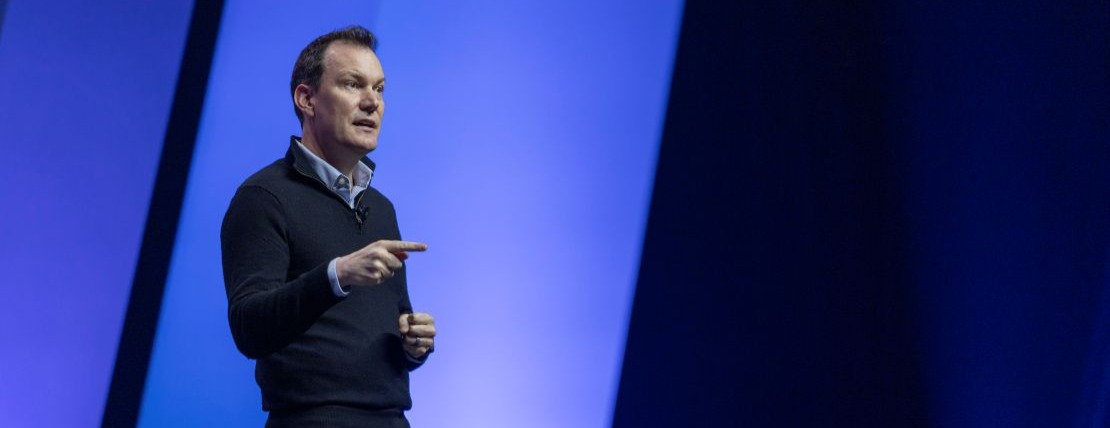
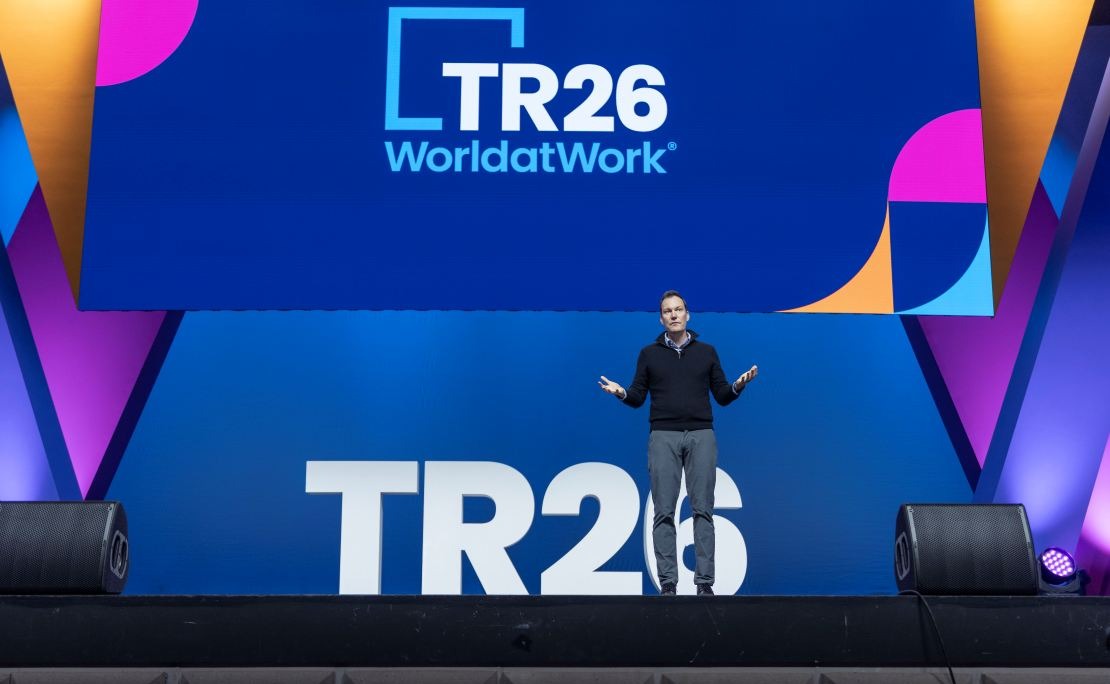
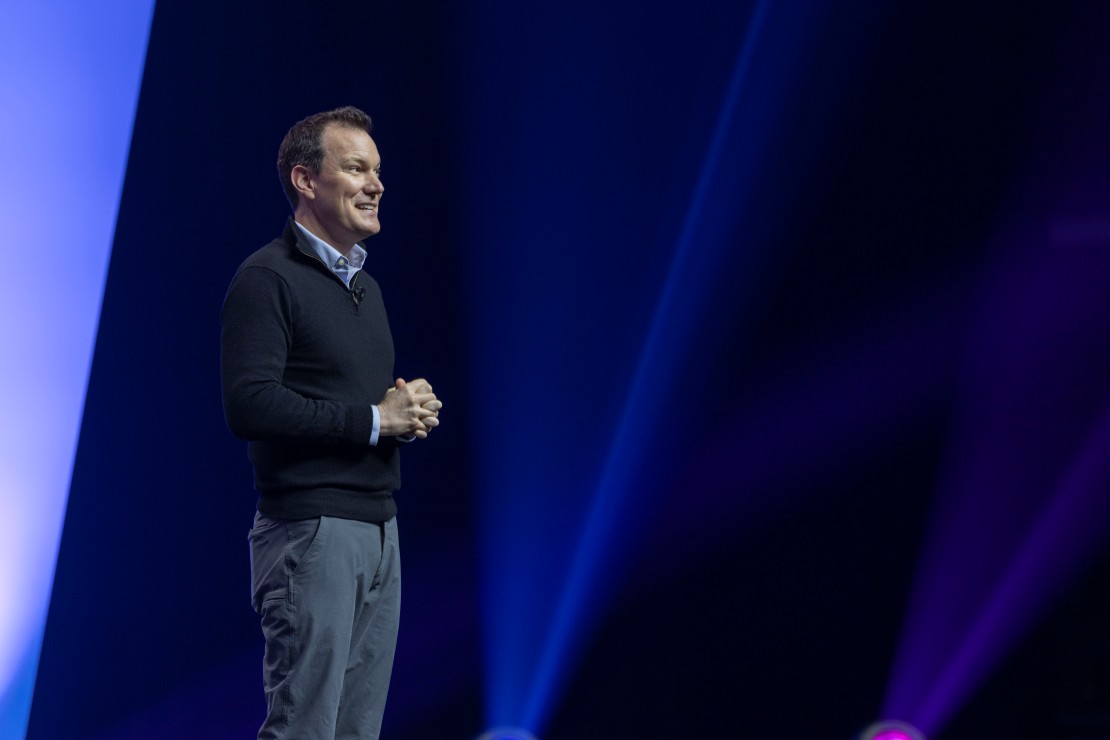
Achor delivered the opening main stage address on Sunday evening, April 19, at WorldatWork’s Total Rewards ’26 conference in San Antonio, Texas, where he shared some of the findings of this research and discussed how organizations can lean into and cultivate intrinsic motivation through meaningful connections, genuine recognition and a strong belief system.
In his session, titled “Intrinsic Motivation: The Missing Link in Total Rewards Strategy,” Achor presented evidence-based habits and leadership behaviors designed to:
- Reduce burnout. Proactively manage stress by changing the lens through which employees view challenges.
- Strengthen connections. Build a “Neural Tribe” to increase employee resilience and commitment.
- Improve engagement at scale. Utilize real-world examples from large, complex organizations to demonstrate what works and lasts.
By focusing on the practical application of “positive psychology” (the scientific study of what makes life worth living, focusing on human strengths, flourishing and well-being), Achor showed HR and total rewards (TR) leaders how to integrate these habits and behaviors into daily workplace culture.
Workspan Daily (WD) connected with Achor to discuss critical workforce/workplace psychology concepts, including those featured in the WorldatWork study and the researcher’s books (including 2010’s “The Happiness Advantage” and soon-to-be-released “The Power of Beliefs”). In this dialogue, you may better understand how beliefs — perceptions about work, recognition, compensation and more — not only shape the lens through which individuals see the world but strongly determine what happens next.
Check out Workspan Daily’s on-site coverage of Total Rewards ’26:
- Why You Need to Be Attuned to Your Culture’s ‘Silent Signals’
- WorldatWork, HRCI Leaders Kick Off Program Exploring Work’s New Era
- Why Bravery Is a Formal Habit HR Pros Need to Build and Lean Into
- Your Voice and Vision May Be Your Most Important HR Leadership Tools
- Cha-Ching: How to Transform HR into a Profit Center
- What’s Your Role in Making AI a Responsible HR/TR Tool?
Check out Workspan Daily pre-conference coverage on Total Rewards ’26:
- To Enhance Employee Experience, Lean into Integrity, ‘Radical Honesty’
- Conference Session Takes Community Approach to Solving HR Problems
- BIG Ideas: Learn How to Get the Most Out of a Small HR Budget and Team
- Recognize that Employee Recognition Needs Some Attention
- Hard Choices, Soft Solutions: A Considerate Approach to Compensation
- Making the Leap to a Pay-for-Performance Approach that Works
- Are You Speaking Gen Z’s Language When It Comes to Total Rewards?
WD: In your work, you’ve noted that happiness fuels success, rather than the other way around. For HR and TR leaders struggling with disengaged teams, what is the fastest way to start cultivating a “happiness advantage” to boost intrinsic motivation?
Achor: The fastest lever is usually the smallest one — and that’s what most leaders miss. They’re waiting for a culture initiative or a budget cycle, but the research shows you can shift the belief state of a team in two minutes a day.
Here’s a real example. I worked with a hospital system where leaders started every team meeting with one thing they were grateful for and one win from the past week. The entire exercise took less than two minutes. They did it consistently for two years. Then, the Pulse nightclub shooting happened, and every victim came to that hospital. The next morning, staff gathered and started their shift the same way they had for two years — with gratitude. That ritual didn’t just build morale — it built resilience.
For HR leaders, the entry point is simple: Change the signals you send about what the organization values. When you open a team huddle with a story of impact instead of a dashboard update, when you make meaningful work visible rather than assumed, you’re not running a soft culture program — you’re rewiring what people believe about their work. That belief shift is what drives intrinsic motivation.
The data from the 2026 State of Rewards Report, built from 1,316 survey respondents, is unambiguous: Employees with strong beliefs about their work — whether they find it meaningful, feel they matter and see room to grow — report an eNPS [employee Net Promoter Score] of 8.84, compared to 5.36 for those who don’t. Same organization. Same rewards package. Completely different outcomes.
WD: You’ve previously found that when given the choice between a 20% pay raise and a boss who helps workers find their true meaning, nearly 80% of workers would opt for the helpful boss. What does that say about the current state of TR and the workforce?
Achor: The State of Rewards data shows organizations are investing an average of $77,000 per employee per year. Benefits satisfaction is at 77%, compensation at 69%. By traditional metrics, the investment is landing. And yet, only 44% of employees say they are extremely likely to stay, and 3 out of 4 are already searching externally.
What that finding about meaning versus pay tells us is people are not primarily motivated by a transaction. They want to believe their work matters — and they want a leader who helps them see that.
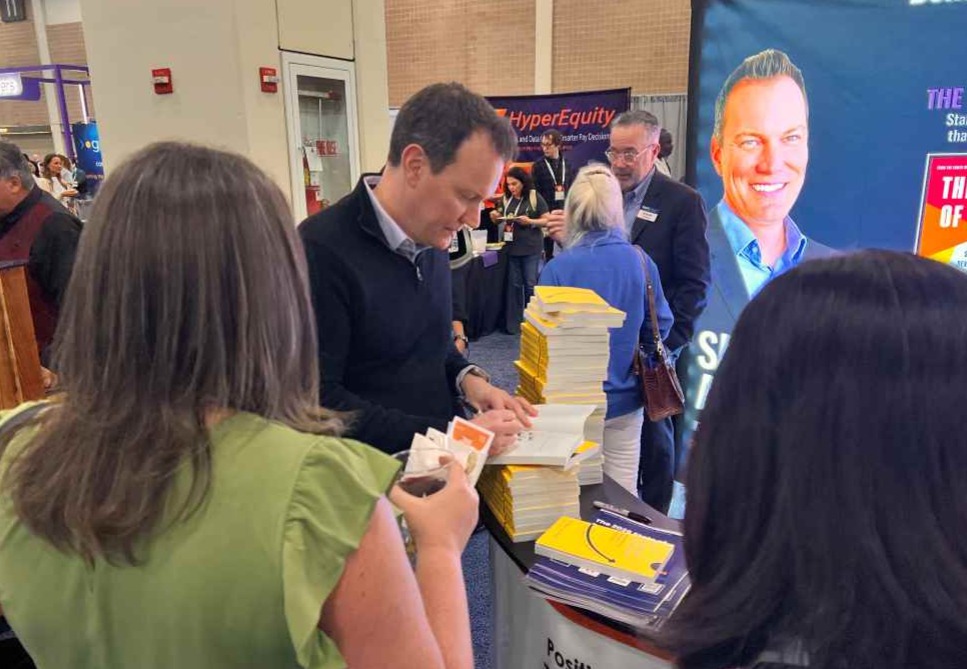
My new book, “The Power of Beliefs” [available May 5], documents exactly why — and why this effect is accelerating in the modern workplace. Strengthening even one belief like “I matter” or “This work is meaningful” can dramatically improve performance, resilience and long-term outcomes.
Compensation gets people in the door. Belief in their work is what makes them stay.
WD: In today’s high-turnover environment, how might HR leaders shift from a “pay-for-performance” model to a more purpose-driven workplace?
Achor: Compensation matters — it’s table stakes. The problem is over-relying on it at the exact moment when the data shows it’s the weakest predictor of retention.
The 2026 research reveals what I call the “Rewards Paradox”: The rewards employees are most satisfied with — benefits and compensation — are the weakest predictors of retention. Meanwhile, career development and recognition are the strongest. We’re overinvesting in comfort and underinvesting in commitment.
The shift is not to remove compensation — it’s to build the belief infrastructure that makes those rewards land differently.
In a major insurance and financial services organization known for member loyalty and operational excellence, leaders embedded belief into the daily architecture of work — team huddles, recognition rituals and a shared language around core beliefs. Over five years, the division achieved more than 400% revenue growth with voluntary turnover of just 4.9%. The pay structure didn’t change. What changed was what people believed.
WD: How can leaders foster meaningful connection in hybrid environments?
Achor: What people need isn’t more interactions — it’s meaningful, predictable ones.
One team [that was studied] began leaving handwritten notes acknowledging colleagues’ contributions. One note. One moment. But it was deliberate, and it changed behavior.
[Another used] a two-minute huddle, a shared win, a visible moment of impact.
These are not soft gestures. They are the delivery mechanism for belief — meaning, mattering, growth.
WD: What are the most destructive beliefs employees hold today, and how can leaders help reframe them?
Achor: Beliefs don’t just reflect reality; they change the math of what’s possible. That’s the central thesis of “The Power of Beliefs”.
The most destructive beliefs employees carry are the simplest ones:
- “I don’t matter.”
- “This work is meaningless.”
- “My effort doesn’t change anything.”
At Kaiser Permanente, a medical services and insurance provider, receptionists were given the ability to flag patients for cancer screenings during unrelated calls. Suddenly, they weren’t answering phones — they were saving lives. By the time I was working with them, those receptionists had been connected to 400 life-saving diagnoses. The job didn’t change — the belief did. And, that changed everything.
WD: You have chronicled rising anxiety and burnout in the workforce and refer to this in a phenomenon known as “The Great Drift.” How can HR leaders practically apply the “7 Core Beliefs” from your new book to strengthen employee well-being and resilience?
Achor: The Great Drift is the slow erosion of the shared sources of meaning that used to anchor people’s belief systems — the community, the institution, the occupation you built a life around. Over the past 40 years, we’ve drifted away from those anchors. Rates of anxiety, depression, burnout and loneliness have doubled — not just for working adults but all the way down to 7-year-olds. The workplace now has an extraordinary opportunity to rebuild that.
Does your onboarding signal “you matter here”? Does your recognition reach the front line or only the performers who already feel seen? These aren’t cultural questions. They are performance variables.
The Meaning of ‘The Orange Frog’During his Total Rewards ’26 presentation, Harvard researcher Shawn Achor referred several times to “The Orange Frog.” Just who or what is this? “The Orange Frog” is a parable created by Achor based on positive psychology, illustrating that happiness fuels success rather than the reverse. It follows a frog character named Spark who turns orange when adopting a positive mindset, teaching that optimism increases productivity, reduces stress and creates a contagious, high-performance “ripple effect” within teams. The primary lesson is that, like Spark, individuals can choose to see challenges differently, fostering resilience and success, and that this change can spread throughout an organization. Check out Achor’s related book to learn more. |
WD: You discuss the concept of a “Neural Tribe.” How can organizations create a social support network that reinforces a positive belief system across a large, complex organization?
Achor: A Neural Tribe is one of the six strategies in “The Power of Beliefs” for changing beliefs at scale. The core insight is that we don’t develop beliefs in isolation; we develop them through the ecosystem of people, messages and experiences around us. A Neural Tribe is what you deliberately build when you increase the positive belief sources in that ecosystem, giving people a shared language and shared rituals that shift how they see their work.
We now have real-world proof of how it spreads. At Valleywise Health in Phoenix, we measured resilience across three groups:
- Trained employees: 80.1% resilience
- Colleagues who overheard training: 81.4%
- No exposure to training: 72.1%
The culture is teaching itself. You don’t need everyone trained. You need enough people to shift the social script.
WD: What is one simple habit leaders can implement immediately to reduce burnout?
Achor: Start every meeting with a two-minute positive prime:
- One win
- One moment of gratitude
- One example of impact
A sales team that implemented this saw revenue rise 50% — not because of the time [set aside] but because of the belief it created.
WD: What does the future of work look like when HR leaders successfully integrate evidence-based happiness habits into their organization’s culture?
Achor: The future of work will not be defined by who spends the most on rewards. It will be defined by who builds the belief systems that make those rewards work. We are moving from rewards-driven systems to belief-driven ones.
For HR leaders, the shift is this:
- Stop asking, “Are we investing enough?”
- Start asking, “Are we building belief?”
Same world. Same pressures. Different beliefs. Different outcomes.
(Editor’s note: Check out the following WorldatWork on-demand webinar featuring Shawn Achor: From Research to Results: How Positive Psychology and Intrinsic Motivation Drive Performance at Scale)
Check out Workspan Daily’s coverage of the Total Rewards ’25 conference:
- Might a Sales Mindset Be Your Key to Total Rewards Success?
- The Monumental Mission of Meaningful Mentorships
- Proactive TR Pros See ‘Train’ of Change Coming, Take Steps to Act
- The Keys to Creativity and Driving Innovative Total Rewards
- The Pros and Cons of Giving Managers Discretion on Merit Increases
- Using Analytics, Innovative Framework to Transform HR/Total Rewards
- How An Industry Leader Sees Technology Transforming Total Rewards
- Biopharma Compensation Leader Has Put AI Under the Microscope
Editor’s Note: Additional Content
For more information and resources related to this article, see the pages below, which offer quick access to all WorldatWork content on these topics:

#1 Total Rewards & Comp Newsletter
Subscribe to Workspan Weekly and always get the latest news on compensation and Total Rewards delivered directly to you. Never miss another update on the newest regulations, court decisions, state laws and trends in the field.