For WorldatWork Members
- Incentive Pay Practices, research
- 2025-2026 Salary Budget Survey, research
- How to Reward Top Performers When Pay Raises Aren’t Possible, Workspan Daily Plus+ article
- Spreadsheet Tool: Maximize Productivity by Effectively Measuring It, Workspan Daily Plus+ article
- How to Identify the Linkages Between Performance and Pay, Workspan Daily Plus+ article
- Volatility-Proofing Your Incentive Rewards Strategies, Workspan Magazine article
- Perspective: Competitive Pay-to-Stay Wins Over Pay-for-Performance, Journal of Total Rewards article
For Everyone
- Total Rewards ‘26, conference
- Prioritizing Performance: How Might This Push Impact Pay Strategies? Workspan Daily article
- The Pros and Cons of Giving Managers Discretion on Merit Increases, Workspan Daily article
- Alignment, Market Competitiveness Are TR Leaders’ Top 2026 Priorities, Workspan Daily article
- Business Acumen and Communication Strategies in Total Rewards, course
- Base Pay Administration and Pay for Performance, course


At many organizations, pay for performance is not performing and not paying off.
Traditional approaches — involving static rating systems and “peanut butter” merit increases — aren’t hitting the mark with employees, leading to particular issues with top talent (frustration, decreased motivation, retention risks, etc.).
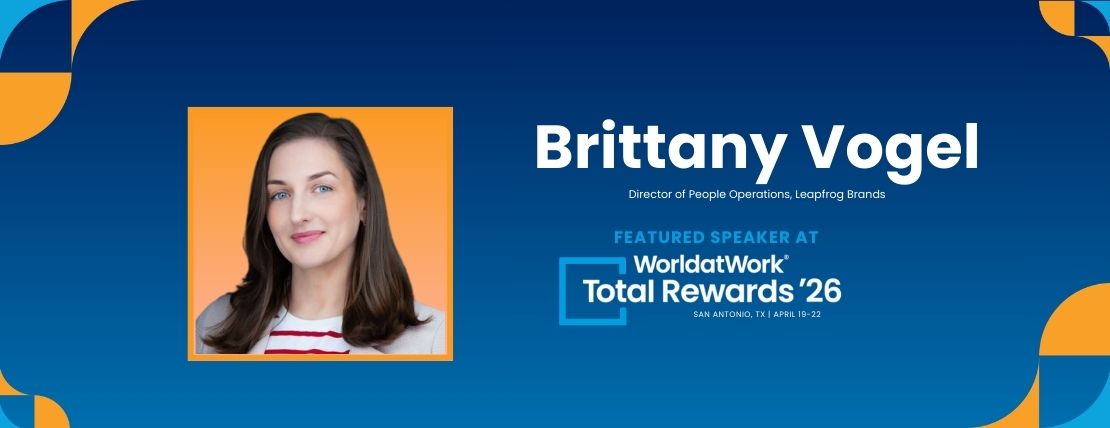
Brittany Vogel, the director of people operations at Leapfrog Brands, a Chicago-based drinkware and food storage solutions company, has seen what works and what doesn’t.
This Certified Compensation Professional (CCP) will share perspectives on the subject along with three industry colleagues during a panel discussion at WorldatWork’s Total Rewards ‘26 conference, which runs April 19-22 in San Antonio, Texas.
Besides Vogel, the April 21 session, titled “Pay for Performance That Actually Pays Off,” will feature:
- Ira Finn, the vice president of total rewards at international insurance firm Ryan Specialty Group (and a CCP and WorldatWork member);
- Lauren Hein, the director of total rewards at compensation software and data company Payscale; and,
- Marc Mullis, a compensation strategy and execution advisor at HR advisory firm Payformance Partners (and a WorldatWork member).
Workspan Daily editor Paul Arnold recently interviewed Vogel to get her take on how to maximize pay-for-performance programs.
Check out Workspan Daily’s on-site coverage of Total Rewards ’26:
- There Is a Distinct Power in Knowing What Matters to Your Workers
- WorldatWork, HRCI Leaders Kick Off Program Exploring Work’s New Era
- Why Bravery Is a Formal Habit HR Pros Need to Build and Lean Into
- Cha-Ching: How to Transform HR into a Profit Center
Check out Workspan Daily pre-conference coverage on Total Rewards ’26:
- To Enhance Employee Experience, Lean into Integrity, ‘Radical Honesty’
- Conference Session Takes Community Approach to Solving HR Problems
- BIG Ideas: Learn How to Get the Most Out of a Small HR Budget and Team
- Recognize that Employee Recognition Needs Some Attention
- Hard Choices, Soft Solutions: A Considerate Approach to Compensation
- Are You Speaking Gen Z’s Language When It Comes to Total Rewards?
Arnold: From your perspective, why do traditional pay-for-performance approaches fall short in motivating top talent? Where’s the disconnect?
Vogel: Companies often want a one-size-fits-all approach when it comes to performance and compensation. While getting some consistency and setting expectations is very important, the reality is one-size-fits-all doesn’t actually fit all. Pay for performance is a good way to ensure there is equity when it comes to compensation, but compensation is often one piece of a larger puzzle when it comes to motivation. Research generally shows compensation matters up to a point, but once pay is perceived as fair and competitive, it stops being a strong driver of performance.
In addition to those monetary rewards, your high performers are often going to be motivated by being challenged at work, being trusted and able to work autonomously, getting recognition, and seeing their career progress. If your compensation discussions don’t include ways to push employees to new performance levels, you’ll find even the best employees can check out.
Arnold: How might a new approach to rewards help address some of these shortcomings and foster a high-performance culture? What does that look like?
Vogel: The landscape of work has changed a lot over the last few years. Between a global pandemic, technology changes and Gen Z entering the workforce, employees have different priorities now than they did 30 years ago. Deloitte recently did a study and learned 90% of Gen Zs and millennials feel that having a sense of purpose is important to their job satisfaction and well-being. In addition, an Unstop study found Gen Zs overwhelmingly would prefer to work for a company offering growth and development opportunities rather than higher wages. If job satisfaction is so important to the workforce, applying a static 1-to-5 rating and peanut-butter-spread salary adjustment ultimately isn’t going to cut it.
If fostering a culture of high performance is important to the organization, you need to bring it back to basics. Giving employees autonomy, trust and a growth path seems to be just as important as that yearly compensation adjustment.
Arnold: How can evolving pay progression and career pathing help an organization recognize and retain its high performers?
Vogel: One of the most common themes I hear from our employees is not “I want more pay” but rather “What does the next step of my career look like?” Employees are eager to find growth and challenges, and if they aren’t getting that at your organization, they may go somewhere else. Defining career paths or levels for departments can feel intimidating, but I like to remind my leaders that a career path doesn’t have to be rigid. There is still nuance that goes into what comes next for an employee, but by not defining it, employees feel like they have nowhere to go or grow.
Arnold: What can HR professionals do to better ensure the organization’s pay practices align with employee expectations and support career progression?
Vogel: My number one priority with pay practices is to make sure there is a strategy behind compensation. If you don’t have a compensation philosophy to guide you, you are doing more work than you likely need to. By having a built-out strategy and philosophy, you can set clear expectations with employees. More than anything, I find employees value transparency. You’re not always going to please everyone with compensation decisions, and sometimes tough calls need to be made, but if you have a clear “why” from the get-go, it can save a lot of headaches when it comes to making sure those expectations are aligned.
Additionally, I think it’s important to train and empower your managers to have conversations with their team about career progression. At some organizations, you will have cut-and-dry expectations, while others may be a little more fluid. When managers have the right training to communicate with their team, employees can feel true support rather than just lip service from leadership.
Arnold: In what ways can total rewards strategies and job leveling improve fairness and transparency in pay increase processes?
Vogel: Organizations can lose sight of how total rewards can impact their team, and it goes hand in hand with transparency. Many employees aren’t going to naturally do the math on how much the company pays into their benefits, 401(k) or other perks. By including a total rewards statement alongside compensation discussions, you can really home in on everything that’s included in the employee experience.
Fairness is always a tricky word to use when it comes to compensation because every person involved is going to have a different perspective on what is fair. Fair to the company may be giving someone as little as possible to save on budget. Fair to an employee may be getting a 20% raise because they think they deserve it. So, think instead about making equitable choices. Adjusting based on team needs, employee needs and, yes, company needs is going to give you a much fairer practice, rather than insisting that everyone should be equal.
Arnold: How have you worked to employ these approaches in your role at Leapfrog Brands? And, what have you learned from your experience?
Vogel: I feel fortunate to have leaders who really value approaching compensation like a conversation rather than something that’s very rigid. Something I think that has really worked within our organization is how we talk about compensation. We make it as transparent as possible. From posting salaries on our job listings to creating salary bands for every role, we really work hard to ensure employees see that transparency from the organization. Additionally, we annually train and retrain managers on how to talk about performance and compensation. We host two best practices sessions for both our people managers and broader team on how to measure performance, what to say during a review and how to transparently share anticipated compensation adjustments. You can’t always make everyone happy, but I, at the very least, want to ensure no one is taken by surprise when they hear about their compensation.
Check out Workspan Daily’s coverage of the Total Rewards ‘25 conference:
- Might a Sales Mindset Be Your Key to Total Rewards Success?
- The Monumental Mission of Meaningful Mentorships
- Proactive TR Pros See ‘Train’ of Change Coming, Take Steps to Act
- The Keys to Creativity and Driving Innovative Total Rewards
- The Pros and Cons of Giving Managers Discretion on Merit Increases
- Using Analytics, Innovative Framework to Transform HR/Total Rewards
- How An Industry Leader Sees Technology Transforming Total Rewards
- Biopharma Compensation Leader Has Put AI Under the Microscope
Editor’s Note: Additional Content
For more information and resources related to this article, see the pages below, which offer quick access to all WorldatWork content on these topics:

#1 Total Rewards & Comp Newsletter
Subscribe to Workspan Weekly and always get the latest news on compensation and Total Rewards delivered directly to you. Never miss another update on the newest regulations, court decisions, state laws and trends in the field.