For WorldatWork Members
- A Letter to the People Who Put People First, Workspan Magazine article
- Employees’ Reward Priorities Evolve. WorldatWork and HR Must, Too. Workspan Magazine article
- The Next 70, Workspan Magazine article
- 5 Minutes With … Athar Siddiqee, Micron Technology’s Global Total Rewards Leader, Workspan Magazine article
- India Launches $11 Billion Incentive Compensation Plan to Create Jobs, Workspan Magazine article
- 2026 Priorities of Total Rewards Leaders, research
For Everyone
- WorldatWork TR27, conference
- WorldatWork APAC Event Explored the ROI and Future of Rewards, Workspan Daily article
- WorldatWork India Conference Provided Views into Total Rewards’ Future, Workspan Daily article
- Global Report Reflects Employers’ Salary Budget Conservatism, Workspan Daily article
- A Primer on WorldatWork’s Total Rewards Competency Framework, Workspan Daily article
- How to Use Our Rewards Framework as a Current-State Assessment Tool, Workspan Daily article
- From Employees to Owners: Building the Mindsets That Drive Performance and Engagement, Dec. 3 webinar


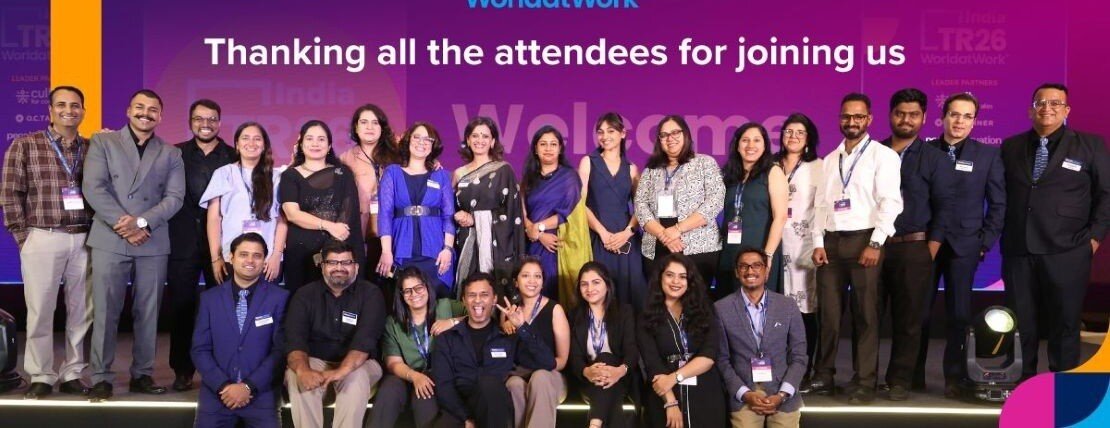
As organizations encounter rapid technological change, evolving workforce expectations and increasing pressure to demonstrate business value, the HR and Rewards function is becoming a strategic driver of organizational performance. This was the central message of Total Rewards ’26 India Edition, a WorldatWork conference held Oct. 6-7 in Mumbai.
Marking five years of WorldatWork India, the two-day conference brought together HR and Rewards leaders, business executives, and global experts to explore how organizations can align people strategies with business priorities, rethink reward design, and prepare for a future shaped by artificial intelligence (AI) and changing skills.
The conference also marked two milestones:
- The launch of WorldatWork’s India-developed Business Acumen and Communications Strategies in Total Rewards course; and,
- The introduction of the Total Rewards Ready Employer accreditation.
Internalizing Increased Demand and Expectations
Across keynotes, panel discussions and workshops, one message emerged consistently at the event: HR and Rewards professionals must understand how their organizations create value and demonstrate how people decisions contribute to business outcomes.
Among the most pressing themes were:
- Business and financial acumen. Leaders and practitioners must understand business models, financial performance and organizational strategy to design rewards that support enterprise priorities.
- AI and workforce transformation. Technology is changing how work is performed, what skills organizations need and how jobs should be valued.
- Agile decision-making. Organizations are empowering departmental managers and business leaders to make reward decisions within appropriate governance frameworks.
- Personalization and flexibility. Workers increasingly expect rewards that reflect their needs, career stages and life circumstances.
- Recognition and well-being. Meaningful recognition, supportive leadership and holistic well-being strengthen the employee experience beyond monetary compensation.
- Governance and transparency. Executive compensation, pay equity and AI-assisted decisions require clear accountability and defensible processes.
Moving HR From Support Function to Strategic Partner
In his opening keynote, “The Odyssey: Navigating Tectonic Shifts. Building an Organization for the Voyage Ahead,” Samik Basu, the chief HR officer at Hindalco Industries, explored how organizations must adapt their people practices to technological, economic and workforce disruption.
The experience of this company, a leader in the mining and metals processing industries, illustrated the importance of combining a strong organizational culture with agile decision-making. The company moved five rewards decisions (performance ratings, merit increases, incentives, promotions and market adjustments) to managers operating within defined guardrails, and supported by data, calibration and bias training. The approach reflects a broader shift in HR’s role: Rather than owning every decision, the function must improve the quality of decisions made across the business.
This theme continued in “The CEO-CHRO Alignment: What Business Really Expects from People Strategy,” a conversation between WorldatWork CEO Scott Cawood and George Verghese, the managing director of engineering company Kirloskar Industries, which emphasized HR professionals aspiring to senior business leadership must understand:
- How their organizations make money;
- Where value is created; and.
- What drives growth.
The message was clear: HR gains strategic credibility by helping the business make better decisions and not simply by aligning its activities with decisions already made.
Building Business Acumen and Financial Literacy
The conference translated this leadership message into practical learning through a business and finance acumen workshop led by consultant/professor Mark Bussin, who also serves as a WorldatWork faculty member.
The session focused on understanding financial statements, connecting workforce investments to business performance and using human capital metrics to demonstrate the value of people decisions. Participants explored human capital “value added” and return on investment, workforce planning, and incentive design.
A central takeaway from the workshop was that measuring activity isn’t the same as measuring impact. Put into practice, HR leaders must move beyond reporting how many programs were delivered or how much was monetarily spent to instead demonstrate how their efforts changed results.
Balancing the AI and Skills Revolution
AI was a recurring theme across both days of the conference, and captured its influence on organizational transformation, reward design, analytics, decision support and more.
In his keynote, “AI and Business Acumen: From Technology Adoption to Business Value,” Kaushik Das, the senior director and head of talent, learning and culture at TIAA Global Capabilities, challenged organizations to look beyond technology adoption and focus on the value AI creates. His central argument was that:
- Access to AI tools doesn’t automatically translate into enterprise value; and,
- Organizations like TIAA (a tech, operations and shared-services provider) instead must redesign workflows, develop workforce capabilities and establish clear measures of business impact.
The implications for the HR/Rewards function are significant. As AI changes the nature of work, organizations must reconsider how they define roles, assess skills and recognize contributions. The conference highlighted a key challenge: organizations may be adding AI-related skills to roles without adjusting compensation to reflect those capabilities.
Addressing the Complexities of Executive Pay
The conference also examined the distinctive challenges of executive compensation in India.
The panel discussion “Executive Pay in India: Balancing Performance, Promoter Expectations and Public Scrutiny” brought together:
- Ashwani Dahiya, the managing director of TRC Management Consulting (and WorldatWork faculty member);
- Hetal Dalal, the president and chief operating officer of Institutional Investor Advisory Services, a proxy advisory firm; and,
- Sanjay Gawde, the CHRO of Mahindra Logistics, a supply chain management and third-party logistics company.
This session delved into the relationship between executive pay, shareholder outcomes, promoter ownership, performance measurement and public accountability.
A central concern was the need for a clearer connection between compensation and the value executives create. The panel examined how profit-linked commissions, deferred compensation and clawback provisions can complicate this relationship. They also examined the role of disclosure. Investors need sufficient information to understand how compensation decisions are made, what performance measures are used and why a particular pay outcome is justified.
The broader lesson was that effective executive compensation requires more than benchmarking pay against the market. It demands a defensible philosophy, appropriate performance measures, robust governance and transparent communication.
Designing Rewards Around Business Strategy
The practical application of these themes came together in “The People-Pay Alignment Lab,” a session led by Rahul Baunthiyal, the group vice president of HR at Hinduja Group, a multi-industry conglomerate.
The workshop introduced the ALIGN framework as a structured approach to Rewards strategy. Components of the acronym are:
- Align to the business. Understand the organization’s life cycle, market position and strategic priorities.
- Link to talent strategy. Identify the capabilities and talent segments most important to business success.
- Integrate the rewards architecture. Ensure compensation, incentives, benefits and long-term rewards work together.
- Govern for fairness. Establish appropriate controls, consistency and accountability.
- Navigate value and investment. Evaluate rewards costs against the outcomes they are intended to deliver.
The framework reinforced the importance of designing rewards for an organization’s actual circumstances rather than relying on benchmarking or adopting technology without first understanding the underlying problem. Put succinctly:
- A rewards strategy that works for a startup may not suit a mature organization.
- Similarly, a company competing through innovation may need a different approach from one focused on operational efficiency.
Executing in the Real World
Overall, the conference offered HR and Rewards leaders a practical agenda for applying these insights:
- Start with business strategy. Understand organizational priorities, financial performance and competitive challenges before designing rewards interventions.
- Build business acumen. Strengthen financial literacy, workforce planning and the ability to communicate the business implications of people decisions.
- Empower managers responsibly. Bring decisions closer to the work while maintaining clear guardrails and accountability.
- Redesign for changing skills. Reassess how roles and contributions are valued as AI reshapes work.
- Personalize the employee experience. Combine relevant pay, benefits, recognition, flexibility and well-being while preserving fairness.
- Measure impact. Track outcomes rather than relying on activity or expenditure alone.
- Use technology responsibly. Apply AI and analytics without compromising confidentiality or human judgment.
- Communicate transparently. Explain rewards decisions clearly to build trust and organizational credibility.
Thriving in Rewards’ Next Chapter
The WorldatWork India event brought together the interconnected challenges facing the profession and highlighted opportunities for continued professional development.
As the profession looks ahead, the central message remains relevant across industries and organizational life cycles: Rewards can’t operate in isolation from the business it serves.
Your future depends on your ability to connect people strategy with financial performance, use technology responsibly, design rewards around employee needs and demonstrate the outcomes from your decisions.
Editor’s Note: Additional Content
For more information and resources related to this article, see the pages below, which offer quick access to all WorldatWork content on these topics: